What a Transponder Key Actually Is
Most car keys made since the late 1990s contain a small chip — the transponder — hidden in the plastic head of the key. The chip has no battery. When you turn the key, a ring around the ignition powers the chip for a split second and reads its unique code. If that code matches one stored in the car's computer, the engine is allowed to start. If it does not match, the car disables the fuel or starter system, even though the key fits and turns perfectly.
That is why two keys can look identical and behave completely differently. One is known to the car. The other is just a correctly shaped piece of metal.
Cutting and Programming Are Two Separate Jobs
Drivers are often surprised to learn that making a working key is two steps, not one:
- Cutting copies the mechanical shape of the key so it turns the locks and the ignition.
- Programming teaches the car to accept that specific key's chip code.
- Remote matching, on keys with lock and unlock buttons, is sometimes a third step, separate from starting the car.
A hardware-store copy usually only does the first step. That copy may open your door, which makes it useful as an emergency door key — but without programming, it will not start most modern cars. A blinking security light on the dash after you turn the key is the classic sign: the car saw a chip it does not recognize.
When You Need Programming
- A new spare key. Every new transponder key needs to be added to the car, even if you still have a working one.
- All keys lost. With no working key to copy from, the new key has to be introduced from scratch — a bigger job than adding a spare.
- A key that stopped starting the car. Chips can fail after a drop, water damage, or a cracked key head, even when the blade is fine.
- A used key from online. Many cannot be reused on a different car at all, and the ones that can still need correct programming.
Why Programming Is Not a DIY Button Press
For a handful of older models, an owner procedure using two working keys can add a third. That exception proves the rule: if you already have two working keys, you rarely need help. With one key — or none — the car has to be connected to directly so the new key can be registered in its security system. The exact process differs by make, model, and year, and entering the wrong procedure or using the wrong chip type leaves you with a key that still does not start.
The chip type matters just as much as the shape. Keys that look the same can carry different chips for different years of the same model. Getting the correct chip, cutting it accurately, and registering it to the car in one visit is what separates a working key from an expensive door key.
What a Mobile Specialist Does at Your Car
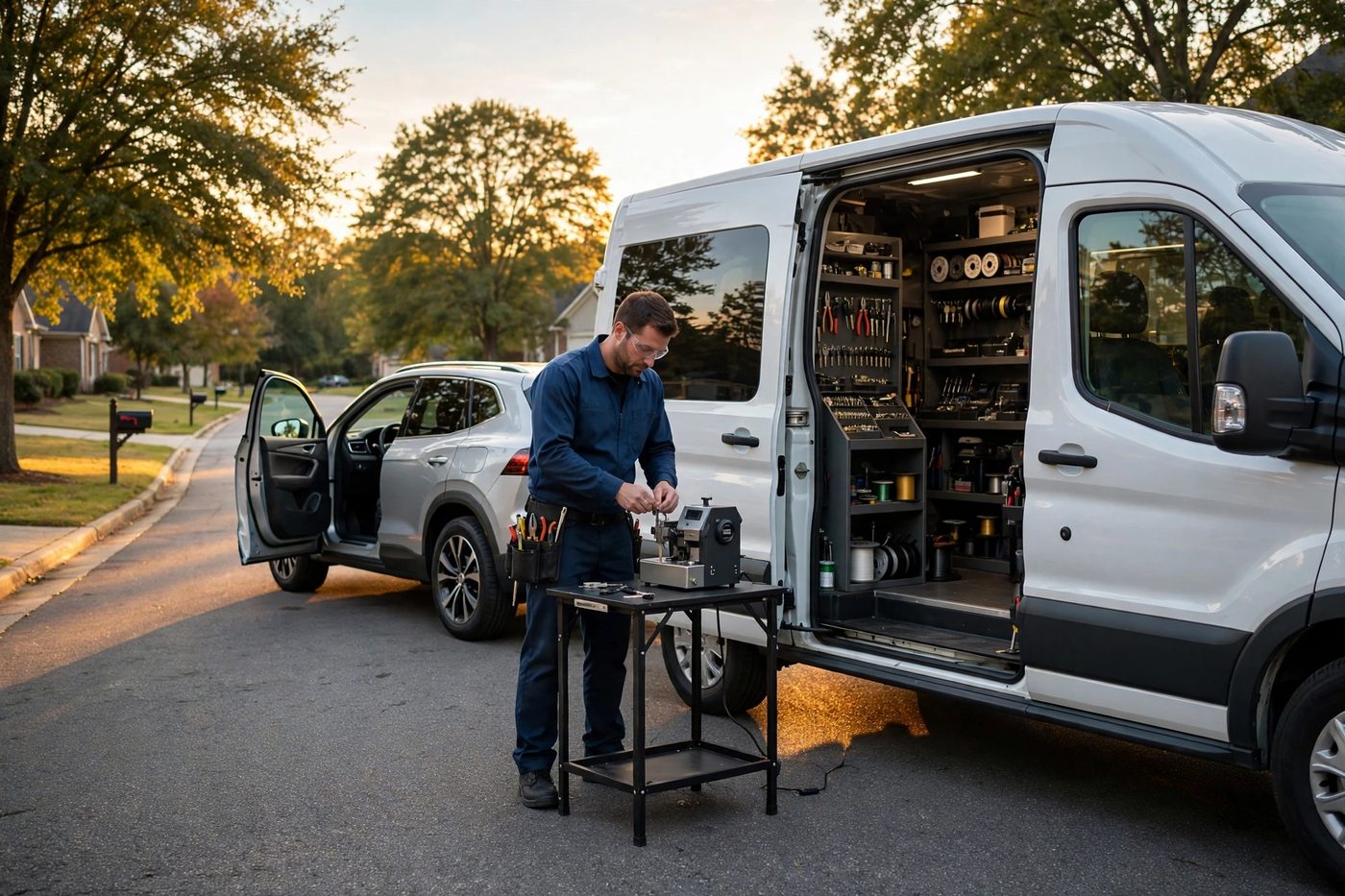
Programming has to happen with the car present — the car itself is half the job. At your location, we identify the correct chip for your year and model, cut the key, register it to the car, and then test it the way you will use it: start the engine, and check the remote buttons if your key has them. If an old key was lost or stolen, ask about removing it from the car's memory so it can no longer start your vehicle.
Lock to Lock handles car key replacement and transponder programming at your location across Metro Atlanta — including Peachtree Corners, Norcross, Duluth, Sandy Springs, Roswell, and Marietta — with no tow to a dealer.
The Cheapest Time to Program a Key Is Now
Adding a spare while you still have one working key is the straightforward version of this job. Waiting until the last key is lost turns it into the all-keys-lost version — more work, more time, and a car that cannot move until it is done. If you are down to one key, that is the right moment to act.
Mention this website when you call for 10% off any service.