Why Car Keys Break in the First Place
Keys rarely snap without warning. Most have been bending, sticking, or needing a wiggle for weeks. Metal fatigues at the narrowest point of the blade, especially on older keys that have been copied several times, used to open packages, or forced in a stiff ignition. Cold mornings, a worn ignition cylinder, and a heavy key ring hanging from the key all add stress. When the break finally happens, it usually happens while turning — which is why the broken piece so often ends up inside the ignition, not on the ground.
A key that needs jiggling to turn is asking for attention. Getting a fresh key cut to the original pattern at that stage is far simpler than extracting a broken one later.
What to Do — and What Not to Do — Right Away
- Stop turning. If part of the key is still in the ignition, leave the cylinder in the position it is in. Turning it further can lock the broken piece behind pins.
- Do not use glue. Super glue on a matchstick or on the other half of the key is the most common DIY fix online — and the most damaging. Glue spreads inside the cylinder, glues pins in place, and can turn a simple extraction into an ignition replacement.
- Do not dig with tweezers or a knife. Pushing tools in beside the fragment usually pushes it deeper and scratches the cylinder walls.
- Keep the broken piece you have. The part in your hand helps identify the key pattern and chip type for the replacement key.
- Take a photo. A clear photo of how deep the fragment sits helps a specialist bring the right extraction tools the first time.
Ignition vs. Door: Two Different Jobs
A fragment in a door lock is inconvenient, but you can often still drive the car with a spare and deal with the door later. A fragment in the ignition is different — the car is not going anywhere until it is out, and the ignition cylinder contains more delicate parts than a door lock. Steering lock, ignition switch alignment, and the transponder ring around the cylinder all sit in that same area, so extraction there needs a gentler, more precise approach.
Push-to-start cars are not immune either. Their emergency key blade, hidden inside the fob, can break in the door lock the same way a traditional key can.
How Professional Extraction Works
Extraction is not pulling harder — it is getting a thin, hooked or barbed tool past the fragment so it can be drawn out along the same path it went in, without disturbing the pins around it. The method depends on how deep the piece sits, whether the cylinder was turned after the break, and how much of the blade is accessible. Once the fragment is out, the cylinder is tested with a working key. In many cases the lock itself is undamaged and no replacement is needed.
After extraction, you still need a key that starts the car. If you have the broken halves, a new key can often be cut from that pattern and, on chipped keys, programmed to the vehicle. See how that second step works on our car key replacement and ignition repair pages.
When Extraction Is Not Enough
- The cylinder was already worn or damaged before the key broke.
- Glue or a forced tool attempt has damaged pins inside the lock.
- The fragment is wedged after the cylinder was turned to a new position.
- The key broke because the ignition itself is failing and binding.
In those cases the honest answer may be repairing or replacing the ignition cylinder, then cutting and programming keys to match. A good specialist explains which situation you are in before any work starts, with the price quoted up front.
How to Avoid a Repeat
Replace a key that bends, sticks, or needs a wiggle — do not wait for it to snap. Keep heavy key rings off your car key, and get a spare made while you still have a working key. A spare made now is a straightforward duplicate; a replacement after a break plus extraction is a bigger job in every way.
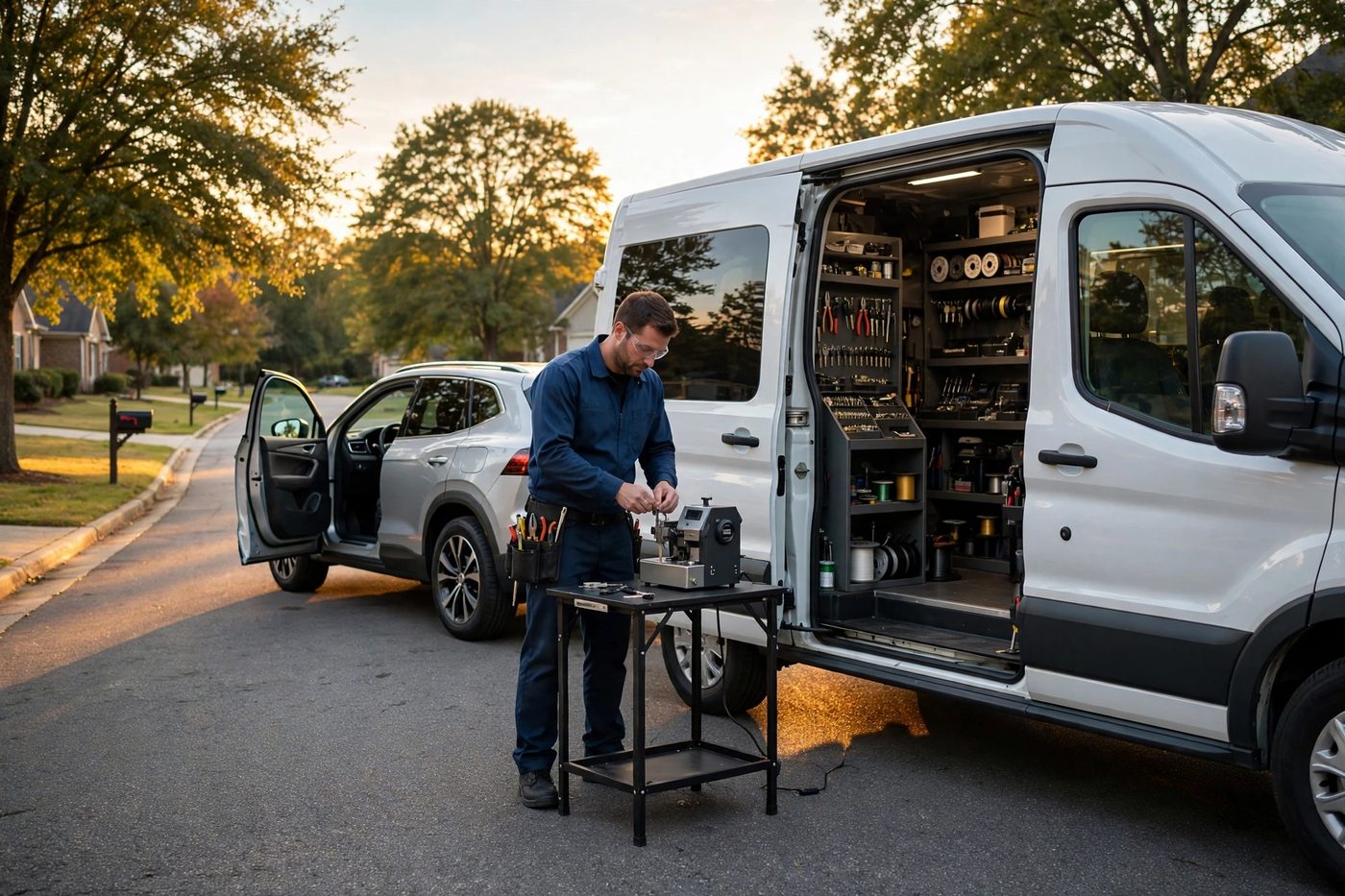
Lock to Lock provides mobile broken key extraction and replacement across Metro Atlanta — including Peachtree Corners, Norcross, Duluth, Sandy Springs, Roswell, and Marietta — at your car, with no tow.
Mention this website when you call for 10% off any service.